
The Growing Technology Support Gap in Senior Living
What the 2026 Ziegler Link-age Leading Age CAST CTO Hotline Report reveals about resident expectations—and why it matters.
The Ziegler Link Age and LeadingAge CAST CTO Hotline report highlights many of the technology priorities shaping senior living today including AI, cybersecurity, connectivity, and operational efficiency. It also reinforces an important shift in resident expectations: today’s residents expect technology to work seamlessly-and they expect support when they need it.
But, one finding later in the report caught my attention: While resident expectations for tech support continue to rise, the percentage of organizations providing formal resident support actually declined.
That disconnect has important implications for technology adoption, resident satisfaction, and ultimately the return on technology investments.
Resident Expectations Expanding
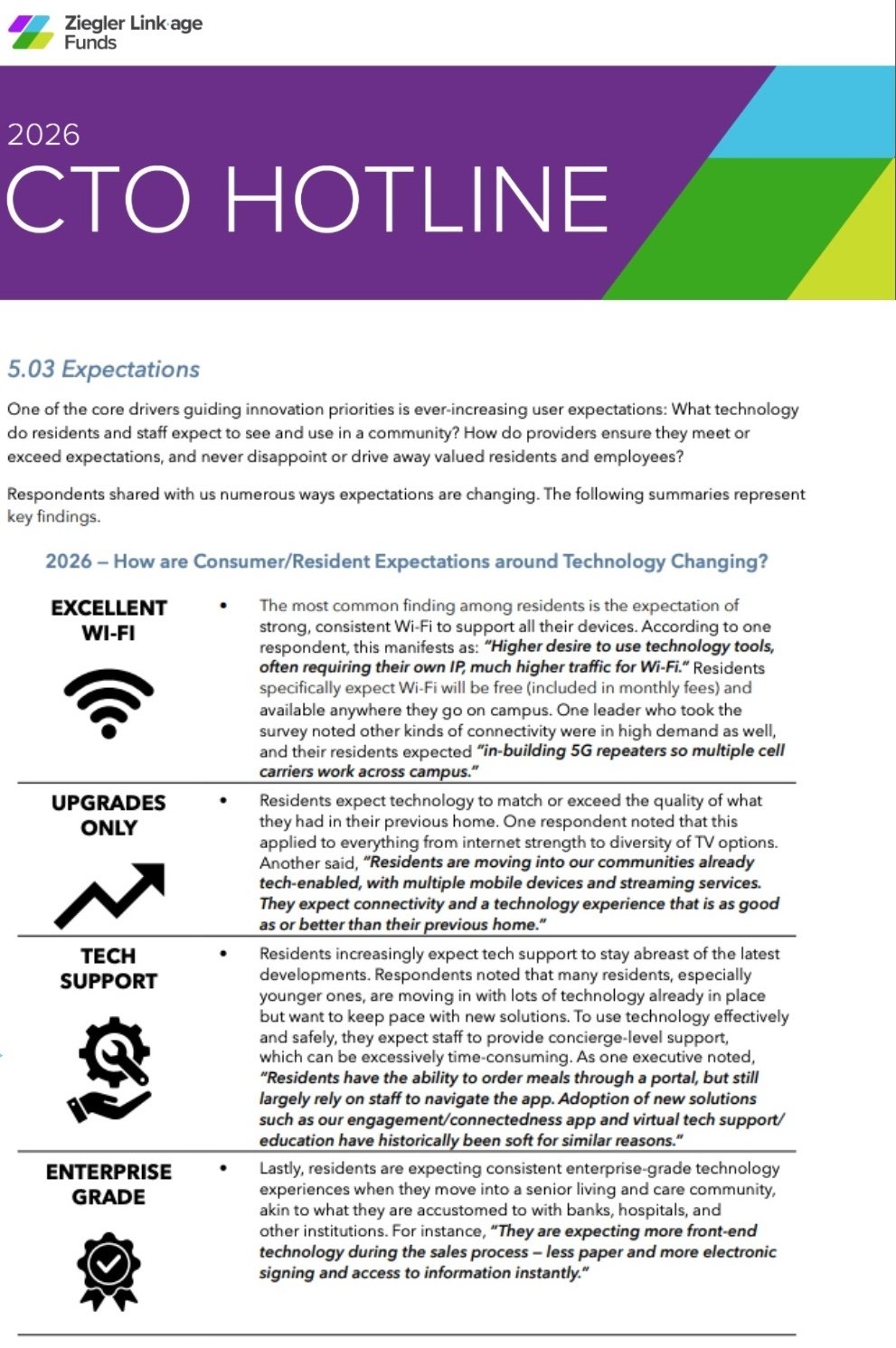
The report identifies four major expectations residents now have:
Excellent Wi-Fi
Modern technology that matches what they had at home
Concierge-level technology support
Enterprise-grade technology experiences throughout the community
None of these expectations are particularly surprising anymore.
What is striking is that residents aren't simply expecting access to technology.
They're expecting help using it.
Today's residents often arrive with smartphones, tablets, streaming services, patient portals, video calling, online banking, and increasingly AI-powered tools. Technology is no longer an amenity—it's part of everyday life.
The report notes that many residents, particularly younger residents, are moving into communities with significant technology experience but still expect concierge-level support to help them keep pace with new technologies. As one executive noted,
‘Residents have the ability to order meals through a portal, but still largely rely on staff to navigate the app. Adoption of new solutions such as our engagement/connectedness app and virtual tech support/ education have historically been soft for similar reasons.’”
This is where technology support becomes a strategic business issue—not simply a resident satisfaction issue.
Communities invest significant resources in resident engagement platforms, dining apps, portals, telehealth, digital signage, and now AI-enabled services.
But if residents don't feel confident using those tools, adoption suffers.
Lower adoption means lower engagement, fewer operational efficiencies, and a reduced return on technology investments. In other words, technology support is increasingly becoming a critical enabler of digital transformation—not just a resident service.
Formal Technology Support Is Declining
Organizations reporting that they provide resident technology support declined from 86% in 2025 to 79% in 2026.
Even the report's authors acknowledge the contradiction, writing:
"Given the growing expectations residents have for the support, we are surprised to see formal resident tech support falling."
Support delivered by in-house staff, volunteers, and outsourced providers all declined modestly year over year.
Interestingly, the report doesn't speculate on why this is happening.
Why This Matters
The report doesn't explain why formal resident technology support has declined, and it's important not to speculate.
What it does reveal is a disconnect between rising resident expectations and the support structures communities have in place.
For senior living leaders, that raises an important strategic question:
How do we ensure residents actually benefit from the technology we're investing in?
Technology implementation is only the beginning. Resident adoption is what ultimately determines whether digital investments improve engagement, operational efficiency, and the resident experience.
Looking Ahead
Technology has become an essential part of daily life, and resident expectations will continue to evolve. The report makes that clear.
What's less clear is how communities will meet those expectations while balancing staffing, budgets, and an increasingly complex technology landscape.
Organizations that successfully bridge that gap won't necessarily be the ones with the most technology. They'll be the ones that make technology approachable, drive resident adoption, and ultimately realize greater value from their digital investments.